
Bedroom
The bedroom is an important part of everyday life. It is where we rest, get dressed, prepare for the day, and manage personal routines.
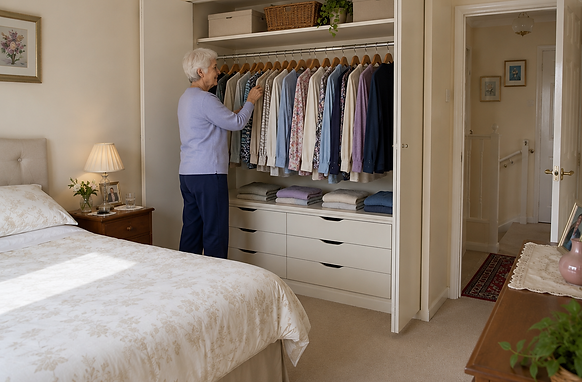
For many people, the bedroom is also where independence begins and ends each day — getting safely in and out of bed, choosing clothes, managing personal items, and preparing to move around the home.
As we get older, changes in strength, balance, mobility, vision, or confidence can make some bedroom activities more challenging. Night-time movement can be particularly difficult because we may be tired, less alert, or moving in low light.
A safe bedroom should support comfort, independence, and confidence while maintaining the person’s privacy and usual routines.
What to consider
Getting In and Out of Bed
Moving in and out of bed requires strength, balance, coordination, and the ability to move safely from lying to standing.
Things to consider:
-
Is the person finding it harder to get in or out of bed?
-
Do they need to push up from nearby furniture?
-
Do they feel unsteady when standing after getting up?
-
Is the bed at a comfortable height?
-
Do they have enough space to move safely around the bed?
Difficulty getting out of bed can increase falls risk, particularly first thing in the morning when people may feel stiff, tired, or less steady.
What might help:
-
Consider whether the bed height allows the person to sit securely before standing
-
Keep the area beside the bed clear
-
Allow time to sit at the edge of the bed before standing
-
Ensure appropriate footwear is easily accessible
-
Consider equipment or supports if transfers are becoming difficult
-
Review the position of furniture to allow safe movement
The best setup depends on the person’s height, mobility, strength, and usual movement pattern.
Lets look at the difference
Getting out of bed can be difficult when there is nothing secure to hold onto. This can increase effort, reduce confidence, and increase the risk of a fall.

A bed lever provides a stable handhold to help someone sit up and stand more easily. It can reduce strain, improve confidence, and support safer transfers in and out of bed.




When Extra Support May Help
Consider seeking advice if someone:
-
Has fallen or nearly fallen getting out of bed
-
Is struggling with transfers
-
Is avoiding getting dressed or completing personal care
-
Needs to hold onto furniture when moving around
-
Is getting up frequently at night and feels unsafe
-
Has had changes in mobility, balance, or confidence
An Occupational Therapist can assess the person, their bedroom setup, and their daily routines to identify practical solutions that support safety and independence.
OT Thought
The bedroom is where each day begins and ends. A safe, well-organised space can make getting up, getting dressed, and going to bed easier and more comfortable.
💡