
Supporting Independence
When someone you care about is finding things more difficult, it's natural to want to help.
Many families find themselves doing more and more over time — making meals, tidying up, carrying things, or helping with dressing and personal care. It often feels like the kind thing to do.
The challenge is that when we regularly do things for someone, they can gradually stop doing them for themselves.
This isn't because they're unwilling. It's because confidence can fade, routines can be lost, and skills can become rusty when they're not used.
Occupational therapists often use a simple phrase:
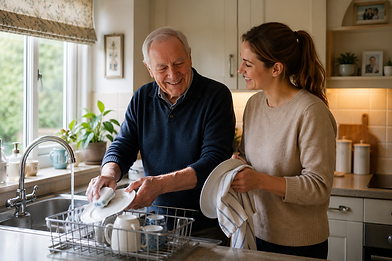
"Do with, not do for."
The goal is to keep people involved in everyday activities for as long as possible, even if they need a bit more time, support, or a different way of doing things.
OT Thought
Small opportunities to participate each day can make a big difference to confidence, independence and quality of life. Often, it's not about doing more — it's about continuing to do what matters.
💡
Practical OT strategies
Before Stepping In, Ask Yourself...
Before taking over a task, pause for a moment and ask:
-
Could the task be made easier?
-
Could it be broken into smaller steps?
-
Would a change to the environment help?
-
Could a piece of equipment make a difference?
-
Is there a part of the task they could still do themselves?
Often, a small adjustment is all that's needed.
Change the Task, Not the Person's Role
Sometimes people stop doing activities because they've become more difficult, not because they're impossible.
For example, instead of thinking:
"Dad can't cook anymore."
Try asking:
-
Could he sit down while preparing food?
-
Could meals be simplified?
-
Could someone help with shopping while he still chooses meals and helps prepare them?
The goal isn't to do things perfectly.
The goal is to stay involved.
Change the Environment
A few simple changes around the home can make everyday activities much easier.
Things that can help include:
-
Keeping everyday items within easy reach
-
Improving lighting in key areas
-
Reducing clutter and trip hazards
-
Creating clear walking routes through the home
-
Storing frequently used items where they're easy to find
A well-organised environment often means less effort, less frustration, and more independence.
Let Equipment Do Some of the Hard Work
Many people see equipment as a sign that someone is becoming dependent.
In reality, the right equipment often does the opposite.
A grab rail, shower seat, perching stool or dressing aid can help someone continue doing a task themselves rather than relying on another person.
Using equipment isn't giving up.
It's finding a different way to stay independent.
It's Okay If Things Take Longer
One of the hardest adjustments for families can be watching someone do things more slowly than they used to.
It is often quicker to step in and do it yourself.
But when someone takes the time to wash, dress, make a cup of tea, or put away their shopping, they are doing more than completing a task.
- They are maintaining skills.
- They are maintaining confidence.
- They are maintaining independence.
Sometimes the most helpful thing you can do is allow a little extra time.
Keep Moving, Keep Doing
The less we do, the harder things become.
When someone stops walking, gardening, preparing meals, or doing household tasks, they can gradually lose strength, balance and confidence.
The good news is that staying active doesn't have to mean going to the gym or attending exercise classes.
Some of the best ways to stay active are already part of everyday life:
-
Walking to the local shop
-
Gardening
-
Preparing meals
-
Light household tasks
-
Playing with grandchildren
-
Taking part in hobbies and interests
The activities people enjoy are often the activities they are most likely to keep doing.
The best exercise is the one someone enjoys enough to do regularly.